
What to Pack for Tiger Safari in India
A First-Timer's Checklist
Packing for a tiger safari confuses almost every first-timer, and for a good reason: no other trip asks you to dress for near-freezing mornings and scorching afternoons on the same day, in an open vehicle, on dusty tracks, with a strict luggage limit at some lodges. Get it right and you barely think about your gear all trip. Get it wrong and you spend your drives shivering, sunburnt, or fumbling for things you left in your room.
This guide answers the question of what to pack for tiger safari in India, item by item and reason by reason. You will learn what clothing actually works in an open Gypsy, which colours matter and why, what the season changes, what camera and optics gear is worth carrying, the small items experienced travellers never skip, and what to leave at home. By the end, you will have a complete checklist you can pack from directly.
What clothing works best on a tiger safari?
Think layers, not outfits. A safari day starts cold, turns warm by mid-morning, gets hot by noon, and cools again on the evening drive. The only system that handles all of that is three or four thin layers you can add and remove in the vehicle.
The base is simple: breathable cotton or quick-dry t-shirts and full-sleeve shirts. Full sleeves matter more than most first-timers expect, protecting you from sun, dust, and insects all at once. Over that, a fleece or light sweater for mornings, and in winter, a proper insulated jacket on top. For the bottom half, comfortable full-length trousers in cotton or trekking fabric. Shorts are a mistake in an open vehicle: sun, dust, and branches all find bare legs.
On colour, stick to the safari palette: khaki, olive, beige, brown, and muted greens. This is not about fashion. Neutral, earthy tones help you blend into the forest backdrop and avoid drawing attention from wildlife. Avoid white and bright colours, which stand out sharply in the forest, and avoid dark blue and black, which attract certain biting insects. Nothing with loud patterns or reflective elements.
Footwear stays simple: closed, comfortable walking shoes or light trekking shoes with socks. You stay in the vehicle inside the park, so heavy boots are unnecessary, but sandals leave your feet cold in the morning and dusty by noon.
How does the season change your packing list?
More than any other single factor. The same park demands a different bag in January than in May.
For winter safaris, from roughly November to February, cold is the enemy, and it surprises everyone. An open vehicle moving at speed in near-freezing air feels far colder than the forecast suggests. Pack a warm jacket, a fleece mid-layer, a woollen cap that covers your ears, a scarf or neck gaiter, and gloves. Gloves matter doubly for photographers; consider a pair that lets your fingers work the camera. Most lodges provide blankets or hot water bottles in the vehicle, but never rely on that alone.
For summer safaris, from March to June, the priorities flip. Heat and sun dominate, with temperatures crossing 45 degrees in central India by May. Pack the lightest full-sleeve cotton you own, a wide-brimmed hat, high-SPF sunscreen, and an electrolyte mix for your water. A cotton scarf earns its place twice over: soaked in water, it cools your neck; wrapped up, it keeps dust out on dry tracks.
For the shoulder months of October and February to March, carry both light layers and one warm layer. Mornings still bite while afternoons already burn, and this in-between window catches more travellers underprepared than either extreme.
What camera and optics gear should you carry?
Start with the item that improves every single drive, photographer or not: binoculars. A good pair in the 8×42 or 10×42 range transforms your safari, turning distant movement into detail and making birdlife a genuine pleasure rather than a blur. One pair per person, not one per family; nobody wants to share during a sighting.
For photographers, the honest advice on wildlife photography gear is to carry what you can handle, not what the professionals carry. A camera body with a zoom in the 100-400mm or 150-600mm range covers most safari situations well. A second body or a wide lens helps for landscapes and habitat shots, but changing lenses on a dusty track is a risk, so many photographers simply zoom out instead.
The unglamorous items decide whether your gear survives the trip: spare batteries, because cold mornings drain them fast; more memory cards than you think you need; a dust-proof camera bag or rain cover; a lens cloth and blower for the ever-present dust; and a beanbag for stabilising long lenses on the vehicle frame, which works far better than a tripod in a shared Gypsy. Charge everything nightly; power access mid-drive does not exist.
Phone photographers should not feel undergunned. A phone plus good binoculars covers memory-making perfectly well; just add a secure strap or grip so an excited moment does not end with a phone on the forest floor.
What small essentials do experienced travellers never skip?
The list is short but non-negotiable.
Sun protection: sunscreen, lip balm with SPF, sunglasses, and a hat that will not fly off in a moving vehicle. Dust finds everything, so pack a buff or scarf for your face on dry tracks and a small pack of wet wipes for the end of every drive.
Health basics: any personal medication in your day bag, not your suitcase; a basic strip of paracetamol and motion sickness tablets; insect repellent for the lodge evenings more than the drives; and hand sanitiser. A small first-aid pouch takes no space and covers the rest.
Practical items: a reusable water bottle, which most good lodges will refill and which keeps single-use plastic out of the forest; a power bank; a small torch or headlamp for early lodge mornings; and a soft day bag to hold all of it in the vehicle. Hard suitcases stay at the lodge; the vehicle bag should be soft, zippable, and dust-resistant.
Documents: carry the original photo ID used for your safari permit on every single drive. Park gates check names against permits, and a forgotten passport or Aadhaar card at the lodge can cost you the entire drive. This single slip ruins more safari mornings than any packing mistake on this list.
What should you leave at home?
Packing well is also about subtraction, and a few things genuinely do not belong on a tiger safari India trip.
Leave the bright and white clothing, as covered above, and anything heavily perfumed: strong deodorants, perfumes, and scented lotions carry far in forest air and are best kept minimal. Leave the drone; drones are prohibited in Indian tiger reserves without special permission, and flying one can end your safari and attract penalties. Leave the Bluetooth speaker; the forest has a soundtrack and every vehicle within earshot came for it.
Skip heavy tripods, which are impractical in shared vehicles, and excessive luggage in general. Many lodges near the parks are compact, some circuits involve small vehicle transfers, and a safari wardrobe is genuinely small: three or four field outfits, rewashed, cover a week. And leave the expectation of connectivity: network coverage inside the parks ranges from patchy to absent, which most travellers come to consider a feature.
How should you pack your safari day bag?
The vehicle bag deserves its own answer, because it is the only luggage that matters between the gate and the exit.
Into a soft, medium day bag goes everything one drive requires: binoculars, camera with charged batteries and spare cards, water bottle, sunscreen, lip balm, wipes, personal medication, ID document, a snack bar for long mornings, and the layer you will shed or add as the temperature swings. In winter, gloves and cap go in the moment you stop wearing them; in summer, the wet-scarf ziplock earns its place.
Keep the bag zipped between sightings; dust settles on everything within minutes on dry tracks. Keep it at your feet, not on the seat, so it never becomes a projectile on rough ground. And pack it the night before every drive, because safari mornings start in the dark, and half-asleep packing at 5 am is how binoculars get left behind.
One habit worth borrowing from guides: after the drive, empty and repack the bag immediately. It takes two minutes, resets everything for the next drive, and means you never discover a dead battery at the gate.
FAQs
Q – What colours should I wear on a tiger safari?
Ans – Neutral, earthy tones like khaki, olive, beige, and brown. Avoid white, bright colours, and very dark blue or black.
Q – Do I really need binoculars if I have a camera?
Ans – Yes. Binoculars serve a different purpose, letting you watch behaviour and scan for movement without raising a lens. A pair per person is ideal.
Q – How cold do winter safari mornings actually get?
Ans – Near freezing in central and north Indian parks, and the open moving vehicle makes it feel colder. A warm jacket, cap, and gloves are essential from November to February.
Q – Are drones allowed in Indian tiger reserves?
Ans – No. Drones are prohibited in tiger reserves without special government permission. Leave them at home.
Q – What documents do I need on each safari drive?
Ans – The original photo ID used to book your permit. Gates verify identity against the permit on every entry.
Conclusion
Knowing what to pack for tiger safari travel comes down to a handful of principles rather than a long shopping list: dress in neutral layers for a day that spans two seasons, let the calendar decide between winter insulation and summer sun protection, carry binoculars above all other optics, keep the small essentials and your permit ID in a soft day bag, and leave the bright colours, drones, and excess luggage at home. Pack this way and the gear disappears from your attention, which is exactly the point: your focus belongs on the forest.
At Ethical Wildlife, every traveller receives season-specific guidance before departure, because the right preparation is part of doing a safari properly. The forest asks very little of you. Meeting it well prepared is the first mark of respect.
Ethical Wildlife curates small-group, photography-led safaris in India and Africa. They specialise in tiger safaris in Bandhavgarh, snow leopard expeditions in Ladakh, and a multitude of trips that connect travellers with nature, ethically and meaningfully. Their focus is on deep experiences, guided by expert naturalists and photographers, and they hold their journeys to inspire, educate and respect nature and the wild.





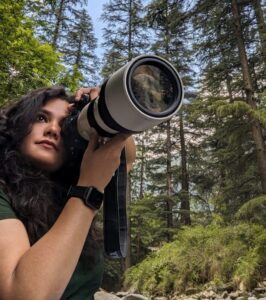 Apoorva Jadon