
The Deer That Finds the Tiger
How Alarm Calls Decide the Best Tiger Safari India
Ask any experienced guide what actually finds tigers, and most won’t mention paw prints, radio calls, or luck. They’ll mention a sambar’s bark, sharp and unmistakable, cutting through the forest from somewhere you can’t yet see. On the best tiger safari India has to offer, that single sound is often worth more than any map, any prior sighting report, or any amount of driving around hoping to get lucky.
This is the part of a tiger safari most first-time travellers never hear about in advance. It isn’t only about where you go. It’s about whether the person driving your jeep knows how to stop, go quiet, and actually listen to what the forest is already telling everyone in it.
What is an alarm call, and why does it matter so much?
An alarm call is exactly what it sounds like: a warning sound made by prey species when they detect a predator nearby. Sambar deer, spotted deer, langurs, and peafowl all make distinct alarm calls, and each one carries real information about where danger is, how close it is, and sometimes even which direction it’s moving. A guide who understands these calls isn’t guessing. They’re reading a live report from animals with far better senses than any human tracker could offer.
This is the foundation of real tiger tracking India relies on, especially in reserves where tigers spend long stretches resting in dense cover, invisible to a passing vehicle but very much noticed by everything around them. Without this layer of forest reading, a safari becomes little more than a slow drive through scenery, hoping a tiger happens to cross the road at the right moment.
Why is the sambar's call considered the most reliable?
Among the calls, the sambar’s deep, resonant bark is generally regarded as the most trustworthy indicator of a tiger’s presence. Sambar are large, alert animals with strong senses of smell and hearing, and they tend to call only when a predator is genuinely close, rather than reacting to every disturbance in the forest.
A single sharp bark, repeated a few times from roughly the same direction, is often enough for an experienced guide to redirect an entire drive.
Compare this to more frequent but less specific calls, like those from langurs or peafowl, which can be triggered by leopards, jackals, or even other disturbances entirely. The sambar’s call carries a kind of weight the others don’t, which is why guides on any guided tiger safari India trip tend to prioritize it above almost anything else they hear. Some guides will describe a sambar call as the single most valuable sound in the forest, more useful than a radio report from another vehicle three kilometers away, simply because it comes from an animal standing close enough to have actually seen the threat.
How do langurs and peafowl fit into the picture?
Langurs, positioned high in the canopy, have excellent visibility across the forest floor and often spot a tiger moving before ground-level prey does. Their alarm call is a sharp, repeated bark that can carry a considerable distance. Peafowl, while less precise, still respond to predator movement with a loud, distinctive call that adds another layer of information when combined with what else is happening around it.
No single call tells the whole story on its own. A good guide is essentially cross-referencing multiple sources in real time, a langur call from one direction, a sambar bark from another, silence from the birds that were calling a minute ago, and building a picture of where a tiger actually is before the vehicle moves an inch. This layered listening is part instinct and part years of accumulated pattern recognition, the kind that can’t really be taught in a single season.
Why do some drivers stop and listen while others just keep driving?
This is really the difference between a safari that finds tigers and one that drives past them. Reading the forest takes patience, experience, and a willingness to stop the vehicle and do nothing for several minutes, even when there’s pressure to keep moving toward a previously reported sighting elsewhere. Less experienced or rushed drivers often prioritize covering ground over listening, chasing secondhand reports rather than paying attention to what’s happening in front of them.
A guide who stops at a sambar call, cuts the engine, and waits is making a judgment call based on real forest knowledge, not offering a scenic pause. That patience is frequently the single biggest difference between operators, and it’s one of the clearest signs of quality when comparing what actually counts as the best tiger safari India has on offer versus a generic drive-and-hope experience. Travellers rarely see this decision-making happen, since it looks like nothing more than a parked jeep, but it’s often the single most important choice made during the entire drive.
Can alarm calls be wrong?
Yes, and understanding this is part of reading them well. A langur might call for a leopard rather than a tiger. A sudden loud noise, unrelated to any predator, can trigger a chain reaction of calls across species. Alarm calls are strong indicators, not guarantees, which is exactly why experienced guides rarely act on a single call in isolation. They wait for a pattern, a second call confirming the first, a direction that stays consistent, silence that follows rather than more unrelated noise.
This is one of the more overlooked tips for spotting tigers in the wild: a single bark is a clue, not a confirmation. Learning to read the buildup, rather than reacting to the first sound, is what separates guides who consistently deliver strong sightings from those who simply chase noise. A guide who moves the vehicle at the first sound, without waiting for confirmation, often ends up circling false leads for the rest of the drive.
Does this differ by reserve?
To some extent. Reserves with dense vegetation and lower visibility rely even more heavily on alarm calls simply because visual tracking is harder. Open terrain reserves, where sightings can sometimes happen through direct visibility alone, still benefit enormously from alarm call awareness, particularly during the middle of the day when tigers are more likely to be resting out of sight. On a Ranthambore tiger safari, for instance, open lake areas can sometimes offer direct visual sightings, but the surrounding forest patches still depend heavily on alarm calls to locate a tiger before it’s visible. Denser reserves, where undergrowth limits sightlines to a few dozen meters, can make alarm calls the only realistic method of tracking for most of a drive.
What should travellers actually do during a quiet moment on safari?
Trust it, and stay alert rather than treating silence as downtime. Some of the most productive minutes on a safari are the quiet ones right after a guide stops the vehicle to listen. Travellers who use that time to talk, check their phones, or assume nothing is happening often miss the exact moment a distant call turns into a confirmed direction. Staying quiet yourself, watching your guide’s reactions, and understanding that stillness is often the most active part of the drive changes how the entire experience feels.
It also helps to ask questions in these moments rather than staying passive. A guide who is actively listening will usually welcome a quiet, low-voice question about what they’re hearing, and explaining it in real time often deepens a traveller’s understanding of the forest far more than any amount of reading beforehand could.
Why does this matter when choosing an operator?
Not every safari operator trains guides to read alarm calls with the same level of discipline. Some prioritize speed and radio coordination between vehicles, essentially chasing confirmed sightings reported by others, while others invest in guides who can independently track through sound alone. Travellers comparing options for the best tiger safari India offers should consider asking directly how a guide typically locates tigers, since the answer often reveals a great deal about the quality of the experience to expect. An operator whose guides describe listening for sambar and langur calls as a primary method, rather than relying purely on radio chatter, is usually one built around patience and forest knowledge rather than convenience.
FAQs
Q – Can I learn to recognize alarm calls myself as a traveller?
Ans – To some extent, yes. Sambar barks and langur calls become recognizable with a bit of exposure, and many guides are happy to point them out and explain what they’re hearing in real time.
Q – Are all guides equally good at reading these signs?
Ans – No, experience varies considerably. More seasoned guides tend to trust and act on alarm calls far more decisively than less experienced ones, who may rely more heavily on radio reports from other vehicles.
Q – Are alarm calls more useful at certain times of day?
Ans – Yes, they’re especially valuable during midday hours when tigers are often resting out of direct view and visual sightings become less likely.
Q – Do other predators trigger the same alarm calls as tigers?
Ans – Yes, leopards and sometimes jackals can trigger similar calls, which is why experienced guides look for patterns and confirmation rather than reacting to a single isolated call.
Conclusion
A tiger safari isn’t really won or lost by where you drive. It’s won or lost by whether someone in that vehicle knows how to stop, go still, and listen to a forest that’s already broadcasting exactly where the danger is. The sambar’s bark, the langur’s call from the canopy, the sudden silence that follows, these are the real signals behind every strong sighting, far more than luck or a lucky turn down the right track. The best tiger safari India offers isn’t defined by the reserve alone. It’s defined by a guide who reads the forest like a language, because that’s exactly what it is.
Ethical Wildlife curates small-group, photography-led safaris in India and Africa. They specialise in tiger safaris in Bandhavgarh, snow leopard expeditions in Ladakh, and a multitude of trips that connect travellers with nature, ethically and meaningfully. Their focus is on deep experiences, guided by expert naturalists and photographers, and they hold their journeys to inspire, educate and respect nature and the wild.



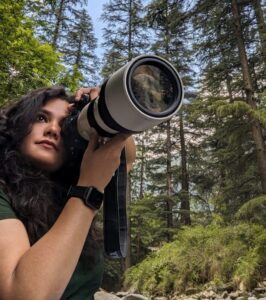 Apoorva Jadon