
Singhalila Red Panda Safari
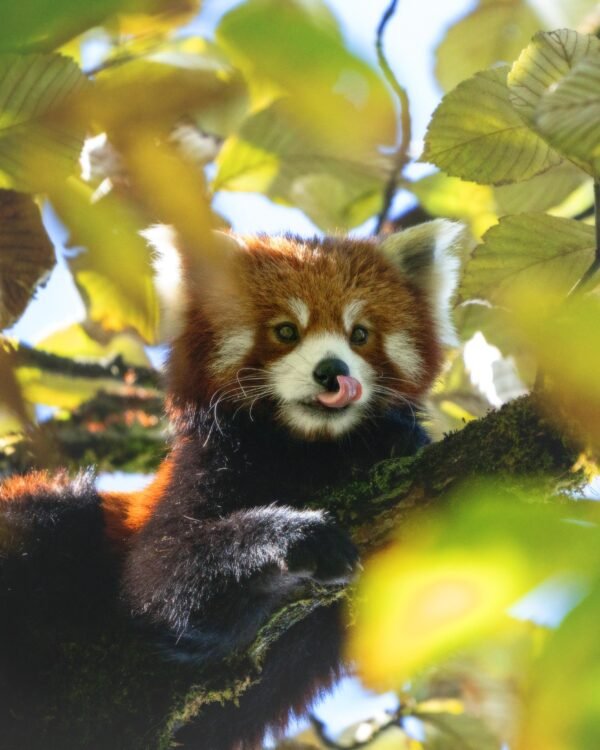
The cloud forests of the Singalila ridge, where the red panda, the original firefox, moves through bamboo beneath four of the world’s five highest peaks.
Safari Timings
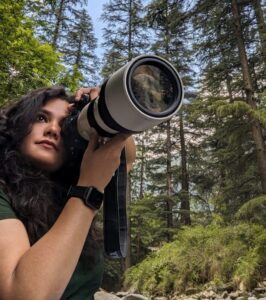
Days here move at tracking pace. Mornings begin in mist with the trackers reading the bamboo for feeding signs and droppings, then the slow, quiet work of scanning canopies until a curl of russet fur resolves out of the moss. When a panda is found, everything is done at its comfort: distance kept, voices lowered, time unlimited, and the photography follows the animal’s terms, with evenings given to fireside image reviews and mentoring, the advantage of travelling with an Indian wildlife photography mentor whose field discipline was built in tiger country and translates perfectly to a subject this shy. The trip closes in the tea gardens of Fikkal with a tasting at a heritage stay, the gentlest possible landing after days in the clouds. Fitness matters here: the terrain is moderate to challenging, nights are cold, and connectivity is satellite-only, which past guests reliably describe as the best feature of the week.
The Safari
The prime tracking windows follow the mountain calendar: the post-monsoon months into early winter, when skies clear and the Sandakphu views earn their reputation, and spring, when the rhododendrons flower and activity rises through the bamboo; recent departures have run in November. Pack for genuine cold at altitude regardless of month, with layers, trekking shoes and rain protection for the gear. Access is via Bagdogra, with the road crossing into Nepal at Kakarbhitta and climbing to the Ilam homestays, all handled within the itinerary, and the journey itself, through tea country into cloud forest, is the expedition’s quiet overture.
Singhalila
On the Singalila ridge of eastern Nepal, where the hill district of Ilam meets the border of Singalila National Park, the forest lives inside the clouds. Bamboo crowds the understorey, moss sleeves every branch, and mist moves through the trees like a resident. Somewhere in that green tangle, between 2,800 and 3,600 metres, lives the red panda: a housecat-sized, flame-coloured enigma so distinct that science gives it a family all its own, and so beloved that it lent its name to a browser before most people had seen a photograph of a wild one.
This is the collection’s purest quest. There are no vehicles, no gates, no sighting boards. The forests here are protected and managed by the local communities themselves, and the trackers who lead each day’s search have spent decades learning individual animals, favoured trees and feeding routes. Every expedition directly funds that guardianship and the red panda research behind it, which makes this less a tour that visits conservation and more a tour that is conservation.
Flora
The cloud forest arranges itself in layers the red panda depends on: oak and magnolia overhead, rhododendron burning through the mid-storey in spring, and everywhere the bamboo, the animal’s almost exclusive diet and the reason it lives precisely here and nowhere lower. Old mossy trunks matter as much as the bamboo, since pandas rest and den in their hollows through the cold, and learning to scan them is the first skill the trackers teach.
Fauna
The red panda headlines, endangered, arboreal and heartbreakingly easy to walk straight past, which is why the local trackers are the expedition’s real engine. The forests around share serious company: Himalayan black bears in the oak zones, the ghostlike clouded leopard that even the trackers count in years between sightings, yellow-throated martens, and several deer species feeding the slopes. None of it shows itself on schedule, and that is the honest contract of the quest: the ridge decides, and the searching itself becomes the experience.
Birdlife
With over 120 recorded species, the ridge rewards every hour the pandas withhold. The stars are the pheasants of Himalayan legend: the satyr tragopan, crimson and improbable, and the blood pheasant moving through the bamboo in coveys. Laughingthrushes work the undergrowth in noisy gangs, sunbirds and yuhinas pick through the rhododendron bloom, and raptors patrol the ridgeline where the forest gives way to sky.
The Sandakphu Sunset
- The expedition climbs to Sandakphu, the highest accessible point on the ridge, for an overnight stay and one of the great mountain views on earth
- From a single vantage, four of the world’s five highest peaks stand on the horizon: Everest, Kanchenjunga, Lhotse and Makalu
- Sunset lights the Kanchenjunga massif, the famous Sleeping Buddha skyline, before the sky hands over to high-altitude stars unpolluted by a single city
- After days spent scanning branches at close range, the ridge lifts your eyes to the largest scale the planet offers, and the contrast is the point



 Apoorva Jadon