
Singalila Ridge · Eastern Himalaya
Singalila Red Panda Expedition
Somewhere in the cloud forest, a red panda is moving through the bamboo. Finding it is an adventure in itself.
At first, the forest seems impossibly dense. Moss covers the branches, bamboo grows beneath the trees and mist comes and goes without warning. Your tracker studies a section of canopy, moves a few steps and looks again. Then a flash of russet fur appears between the leaves.
The red panda is one of Asia’s most enchanting—and elusive—wild animals. A journey to find one along the Singalila ridge is a wonderfully different wildlife experience, shaped by mountain weather, patient searching and the extraordinary knowledge of local trackers.
“Then a flash of russet fur appears between the leaves.”
A Himalayan expedition, not a standard India park holiday
Our proposed expedition area lies primarily in the cloud forests on the eastern Nepal side of the Singalila ridge, close to the Indian border. That distinction matters. Singalila National Park lies on the Indian side, but the proposed trekking and tracking locations, access rules and local arrangements must be described according to the actual route.
International travellers should receive clear information about the Nepal border crossing, visa requirements for their nationality, accommodation standards and the expected amount of walking. The exact route should be confirmed before departure.
The reward extends beyond the wildlife
The mountain setting has a character all its own: tea-growing landscapes on the approach, villages on the hillsides and days spent moving through cloud forest. Depending on the approved itinerary, the wider Singalila ridge may also provide striking views towards some of the world’s highest peaks.
There is something deeply satisfying about an expedition built around local knowledge and observation. Every hour spent learning to read the forest makes the eventual glimpse of a red panda more meaningful.
Planning your red panda journey
Best time
Post-monsoon months and spring can provide useful tracking windows, with very different forest conditions. Travel dates should be matched to local expertise and the planned route.
Getting there
Bagdogra is a common airport gateway for Indian-side access, followed by a road journey and, where applicable, the authorised crossing into Nepal.
Fitness
Expect uphill or uneven walking, cold or wet conditions and long periods of slow observation. Route difficulty should be made explicit before booking.
Photography
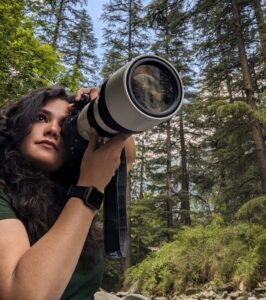
A telephoto lens, weather protection and equipment you can carry comfortably are more important than packing every camera accessory you own.
How Long
Build in multiple tracking days. Finding a wild red panda is the centre of the journey, and it deserves time.
Why this is a once-in-a-lifetime kind of trip
The animal is beautiful, but it’s the way you find it that makes the experience unforgettable: a local tracker reading the forest, a quiet moment in the mist and, finally, a red panda among the branches. Few wildlife encounters feel quite like it.
Explore Ethical Wildlife’s Singalila red panda expeditions and discuss the route, trekking conditions and photography support with our team.
Singalila red panda FAQs
Is the expedition in India or Nepal?
The itinerary described here operates primarily on the Nepal side of the Singalila ridge. Confirm the exact route, border formalities and permits before booking.
Is a red panda easy to spot?
No. Its behaviour and forest habitat make it difficult to find, which is why local trackers and several dedicated search days are important.
Do I need a long telephoto lens?
A telephoto is useful for canopy wildlife, but handling, low-light technique and weather protection also matter.


 Apoorva Jadon