
Ranthambore Tiger Reserve
Regal ruins, legendary tigers, and the most dramatic jungle scenery in Rajasthan.
Safari Timings
Winter (October to February)
- Morning safari: 7:00 AM to 10:30 AM
- Evening safari: 2:00 PM to 5:30 PM
Summer (March to June)
- Morning safari: 6:00 AM to 9:30 AM
- Evening safari: 3:30 PM to 7:00 PM
Timings vary slightly with the season. The best time for a tiger safari in India by most measures is the dry stretch from March to June, when the forest opens up and tigers come to the lakes, though winter offers kinder light and kinder temperatures for photography.
Ranthambore National Park
Ranthambore sits at the meeting point of the Aravalli and Vindhya ranges in southeastern Rajasthan, and few names in Indian wilderness carry more weight. The reserve spans about 1,334 sq. km. including its buffer zones, a sweep of dry deciduous forest, open grassland and ancient stone. Above it all looms the thousand-year-old Ranthambore Fort, watching over the forest like something out of myth.
This is where history and wilderness refuse to separate. Ruined hunting lodges, temples and pavilions stand scattered through the forest, and tigers walk past them as if the centuries never happened. For anyone planning a tiger safari in India, there is no backdrop quite like it.
Flora:
Dhok trees dominate the landscape, giving way to banyan, peepal, jamun and mango in the wetter pockets. In the dry months the forest thins and opens, and sightings rise sharply. Then the monsoon turns everything on its head, and the same hills return lush, green and in full bloom.
Fauna:
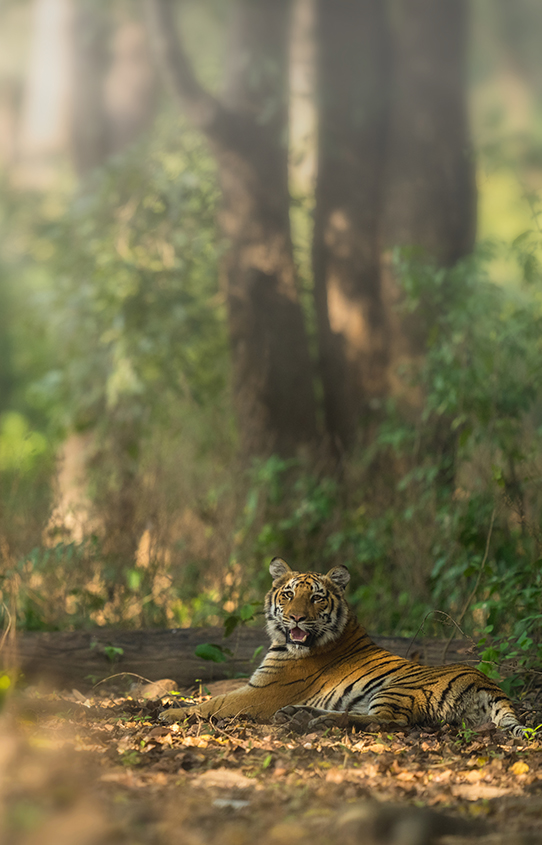
The tigers are the stars here, and Ranthambore’s tigers are unlike any others. Bold, habituated to vehicles, and often out in broad daylight, they have made this park a fixture on tiger photography tours for decades. Many carry names and reputations of their own, dynasties that visitors follow the way others follow royalty. Around them live leopards, striped hyenas, sloth bears, marsh crocodiles and wild boar, with chital, sambar, nilgai and langurs filling the forest floor.
Avifauna (Birds):
With over 300 recorded species, Ranthambore’s skies are as busy as its forest floor. Painted storks, crested serpent eagles, parakeets, peafowl, owls and Indian coursers are regular sights, while the lakes of Padam Talao and Rajbagh draw migratory birds through the winter.
The Safari:
A guided tiger safari in Ranthambore moves through zones, each with its own terrain, its own lakes, and often its own resident tigers. Your naturalist knows which tigress holds which territory, where she was last seen, and what the alarm calls are saying this morning. That knowledge is the difference between driving through a forest and reading one, and it is why tips for spotting tigers in the wild always come back to the same thing: travel with people who know the individual animals, not just the species.
Destination Map
What to do
Jeep Safaris:
Comprise 10 safari zones with trained guides. Zones 3 and 4 are especially known for tigers.
Ranthambore Fort:
The 10th-century fort is a UNESCO World Heritage Site with incredible views and a cultural piece of Rajasthan’s history.
Padam Talao & Jogi Mahal:
Iconic locations for birding and stunning views.
Village Walks & Local Markets:
Meet local communities, see the Rajasthani crafts, and to understand what life is beyond the jungle.
Ranthambore is where the wild and its rawness meets the grandeur of history, the best option for those searching for drama, beauty, and tiger thrills.



 Apoorva Jadon