
Pilibhit Tiger Reserve Safari
One of the narrowest reserves in India, where tigers, swamp deer, and fishing cats move through Terai sal and grassland on the Nepal border.
Safari Timings
Pilibhit opens from November to mid-June and closes through the monsoon, when the Terai floods and the grasslands renew. Winter offers cool mornings, mist over the grass and the full migratory bird count; the dry heat from March onward pulls wildlife to the water and produces the year’s strongest sighting run. Morning and afternoon jeep safaris run daily in season, with timings set by the forest department; confirm the schedule when booking. And if tiger safari cost in India is the question holding your plans back, Pilibhit is quietly one of the most generous answers: uncrowded forest, rising tiger numbers, and none of the premium the famous names command.
Pilibhit
Tucked against the Nepal border in the Terai arc of Uttar Pradesh, Pilibhit is the reserve even seasoned safari travellers keep missing, and the ones who find it tend to keep the discovery to themselves. Dense sal forest runs into tall grassland and a web of perennial streams fed by the Sharda, building exactly the kind of layered, water-rich country that tigers thrive in. There are no crowds here, no queue at the gate, and on many drives the forest is entirely yours.
What makes Pilibhit remarkable is how young its fame is. Notified as a tiger reserve only in 2014, it went on to do something no protected area anywhere in the world had done before: double its tiger population years ahead of the global target, earning the first TX2 award ever given. The tigers were always here, moving through the sugarcane fringes and sal shadows of the Terai. The world has simply started to catch up.
Flora
Sal builds the architecture, tall and close, opening onto grasslands and swampy clearings that the streams keep green through the dry months. This is classic Terai country, the band of moist forest and high grass that once ran unbroken along the Himalayan foothills, and Pilibhit preserves one of its last strongholds. The canals and waterways stitch through everything, which means the forest never fully dries, and neither do your chances.
Fauna
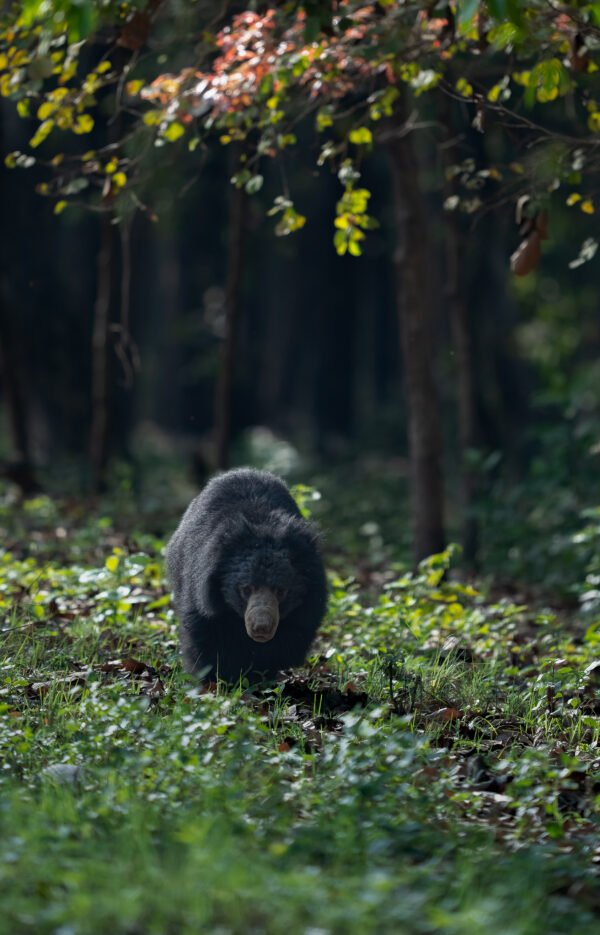
Tigers headline, and in numbers that outgrew every projection. Around them move leopards, sloth bears, swamp deer in the wet grasslands, hog deer and barking deer in the clearings, and the Terai’s quieter specialists: fishing cats along the streams and otters in the canals. Because the grass is tall and the forest close, sightings here carry a particular electricity; animals appear at the edge of cover, whole and sudden, rather than announced from a kilometre away.
Birdlife
With more than 300 recorded species, Pilibhit rewards birders willing to go where the crowds don’t. The grasslands hold the swamp francolin, a Terai endemic, while hornbills work the sal canopy, kingfishers hold every waterway, and winter fills the wetlands and canal edges with migratory waterfowl. The dawn chorus in the sal, before the first jeep engine of the day, is an argument for coming all by itself.
The Forest That Doubled Its Tigers
- In 2014, Pilibhit was a newly notified reserve with roughly 25 tigers and no reputation to speak of
- Within four years the population had more than doubled, a feat the global TX2 programme had set as a ten-year goal
- In 2020, Pilibhit became the first site anywhere on earth to receive the TX2 award for doubling wild tiger numbers
- The engine was unglamorous, patient work: habitat protection, grassland management and communities brought into the effort rather than pushed out of it
Every reserve tells you conservation works. Pilibhit is the proof, and when you drive its trails, you are watching the result in real time.
The Safari
A drive in Pilibhit is the Terai at its most intimate. The track runs through sal corridors where the light falls in shafts, breaks into grassland where swamp deer lift their heads in unison, and follows canals where a fishing cat’s ripple might be the morning’s first clue. With so few vehicles, your naturalist works the forest the old way: pugmarks in the dust, alarm calls plotted against the wind, patience as the primary skill. For travellers looking for a sustainable jungle safari in India, where your presence supports a young reserve still building its future, Pilibhit is the purest version of the idea, and paired with Dudhwa nearby, it completes a Terai circuit that almost nobody else is doing.



 Apoorva Jadon