
Pangot & Sattal Birding Safari
Uttarakhand’s birding heartland above Nainital, where rhododendron slopes and lake forests hold nearly five hundred species, from pheasants to blue magpies.
Safari Timings
The season runs November to May. Winter brings the altitudinal migrants down to meet you and the clearest mountain light; spring, from March onward, is the peak, when resident and migratory birds overlap and the rhododendrons flower alongside them. Pangot mornings are properly cold in winter, so layers matter more than luggage. Access is via Kathgodam, an eight-hour drive or overnight train from Delhi, with Pangot two hours further up the mountain, close enough for a week away, far enough that the only traffic at dawn has feathers.
Pangot & Sattal
In the Kumaon foothills above Nainital, two small places have quietly become the beating heart of Himalayan birding. Pangot is a mountain hamlet wrapped in oak and rhododendron forest above 2,000 metres, where pheasants pick along the roadside verges at dawn. Sattal, an hour and a world below, is a cluster of freshwater lakes set in subtropical forest, warmer, denser, and humming with different life entirely. Between them runs the forested ridge of Kilbury, a birding trail in its own right, so even the transfer day counts.
Together the two hold a combined list approaching 500 species, an almost absurd number for such a small pocket of the map. The reason is altitude. Every few hundred metres of climb changes the forest, and every change in the forest changes the birds, which means a single week here moves you through more habitats than a month of driving across the plains.
Flora:
Pangot belongs to the high oaks: banj and rianj forest hung with moss and ferns, broken by rhododendron that sets the hillsides burning red in spring. Sattal sits in mixed subtropical forest around its lakes, denser and busier, with pine on the drier ridges between the two. For birders the plants are the map; each forest type keeps its own residents, and learning to read the trees is half of learning to find the birds.
Fauna:
The birds headline here, but the mountains keep other company. Yellow-throated martens hunt the oak canopy in pairs, ghoral hold the steep grassy slopes, barking deer call from the ravines, and leopards move through both forests, seen rarely, but written in tracks on the morning trails. Sattal adds its own small spectacle: the lakes and surrounding forest are among the best butterfly habitats in the Himalaya, which is why the itinerary makes room for macro sessions alongside the long lenses.
Avifauna (Birds):
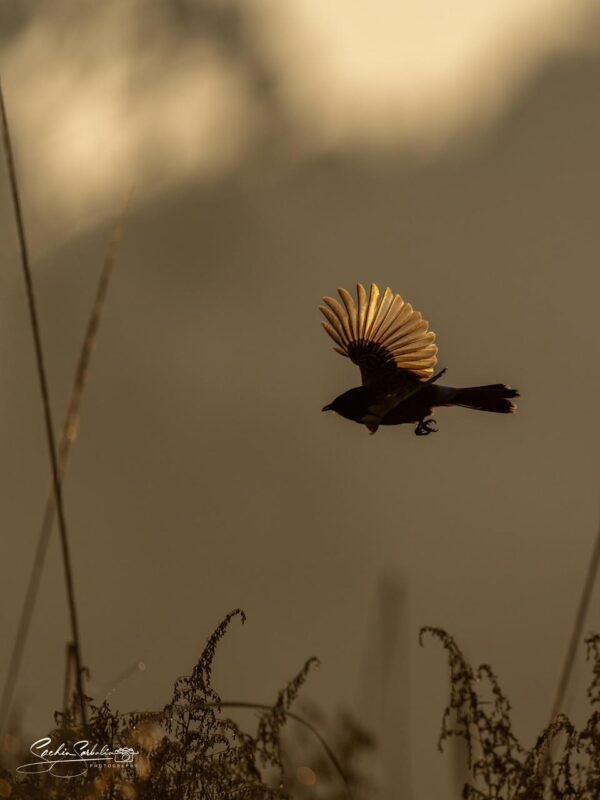
This is pheasant country first. Kalij pheasants cross the Pangot road at first light, koklass call from the ridges, and the slopes around Cheena Peak hold the cheer pheasant, one of the Himalaya’s most sought-after birds. Above them, lammergeiers and Himalayan griffons ride the thermals. Sattal answers with colour and volume: red-billed blue magpies trailing their impossible tails, laughingthrushes working the undergrowth in gangs, woodpeckers and barbets hammering the canopy, and flycatchers, thrushes and warblers filling every layer between. Winter pushes high-altitude species downslope; spring brings the breeders into song. Between the two seasons, there is no bad month.
The Hide Sessions
- Purpose-built hides at both locations bring shy forest birds within portrait range, in natural light, on natural perches
- Sessions follow strict bird-safe practice: no baiting into harm’s way, no playback pressure, no disturbance of nesting birds, principles the entire tour runs on
- For photographers, hides teach what trails cannot: sustained observation of behaviour, feeding rhythms and light, with time to compose rather than react
- Paired with trail walks, they produce the two halves of a complete portfolio: intimate portraits and birds in their wider mountain world
The Safari:
Days here run on foot and patience. Mornings start early and cold on the Pangot trails, Cheena Peak, Timla Pani, Guggu Khan, where the first hour belongs to the pheasants, then soften into hide sessions and image reviews as the light climbs. The move to Sattal births a second trip inside the first: lakeside sessions, oak forest walks toward Jones Estate and Butterfly Point, and the trail to Subhash Dhara for whatever the forest is offering that day. Evenings close with image discussions, the quiet advantage of travelling with an Indian wildlife photography mentor rather than just a guide. As guided wildlife photography tours go, this one asks the least of your fitness and gives the most back per kilometre


 Apoorva Jadon