
Ladakh · Winter · India
Ladakh Snow Leopard Expedition
The mountains look empty. Then your spotter finds the animal everyone came to see.
A snow leopard can be resting on a rocky slope in plain sight and still remain almost impossible to notice. The fur matches the mountain, the body blends into shadow and the distance makes everything look small. Then an experienced spotter points through the scope. What looked like another boulder becomes a wild cat.
That moment is why people travel to Ladakh in winter. Snow leopard tracking is a completely different kind of wildlife journey: more time looking, more time walking, more time learning from local trackers—and the unforgettable reward of seeing an animal perfectly adapted to one of the toughest landscapes on earth.
“What looked like another boulder becomes a wild cat.”
What a tracking day actually looks like
The day often begins in the cold, with local spotters scanning ridgelines and watching the movement of prey species. Bharal, or blue sheep, are an important part of the snow leopard’s food chain. Fresh tracks, prey behaviour and reports from experienced local teams can help guide the search, but there is no fixed route that produces a sighting on demand.
The wider landscape is fascinating too. Golden eagles, Himalayan griffons, bearded vultures, wolves, red foxes and mountain ungulates are all part of the high-altitude story.
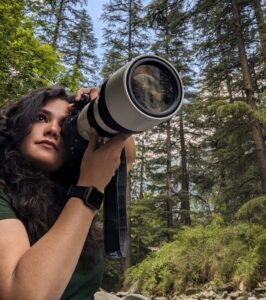
Once a cat is found, the experience is usually about choosing a safe, respectful place to observe it with binoculars or spotting scopes. Photography can involve long focal lengths and patience rather than close approaches. Some days are spent watching distant movement; others may bring a more prolonged encounter.
The value of local spotters
In snow leopard country, field knowledge is everything. Local trackers know the terrain, the likely movement corridors, the behaviour of prey and the practical realities of searching at altitude. Good expedition leadership combines that experience with sound decisions about weather, walking distances, rest and safe wildlife viewing.
For photographers, the challenge is exciting: pale mountains, sharp winter light, long distances and animal behaviour that may unfold slowly. A mentor can help with camera support, exposure against snow or rock, and realistic expectations for lens reach.
The mountain comes first: plan well
Best season
Late winter, broadly January to March, is a popular tracking window. Exact dates are chosen around local conditions and the team’s experience.
Arrival and acclimatisation
Leh is the usual arrival point. Because it sits at high altitude, acclimatisation time is essential before travelling farther or taking on strenuous activity. Your itinerary should show that time clearly rather than squeezing it out.
Fitness
The effort varies by valley and sighting location. You may be standing in deep cold for long periods or walking over uneven, sometimes snowy ground. Ask for an honest description of the expected difficulty.
What to pack
Proper winter layers, insulated footwear, gloves, sun protection and equipment that works in sub-zero temperatures. Spare camera batteries deserve special attention.
Trip length
Allow enough time for acclimatisation and repeated tracking days; this is not a two-night wildlife add-on.
Why a snow leopard expedition stays with you
Because the journey is bigger than the cat. You experience Ladakhi villages, remarkable mountain scenery, the skill of local trackers and a kind of silence that very few wildlife destinations offer. And if the mountains reveal a snow leopard, it is an encounter you will remember for the rest of your life.
Explore Ethical Wildlife’s Ladakh snow leopard expeditions and talk to our team about the tracking area, fitness and winter preparation.
Ladakh safari FAQs
Do snow leopard expeditions involve jeep safaris?
This is primarily a spotting- and tracking-led mountain expedition, with vehicle transfers and walking as appropriate to the location.
How demanding is the trip?
Cold and altitude are significant factors. The level of walking varies, so review your specific itinerary and acclimatisation plan.
What camera equipment works best?
Long telephoto lenses, stable support and spare batteries are valuable for distant mountain wildlife.
What camera equipment works best?
Long telephoto lenses, stable support and spare batteries are valuable for distant mountain wildlife.



 Apoorva Jadon