
Leh and Ladakh
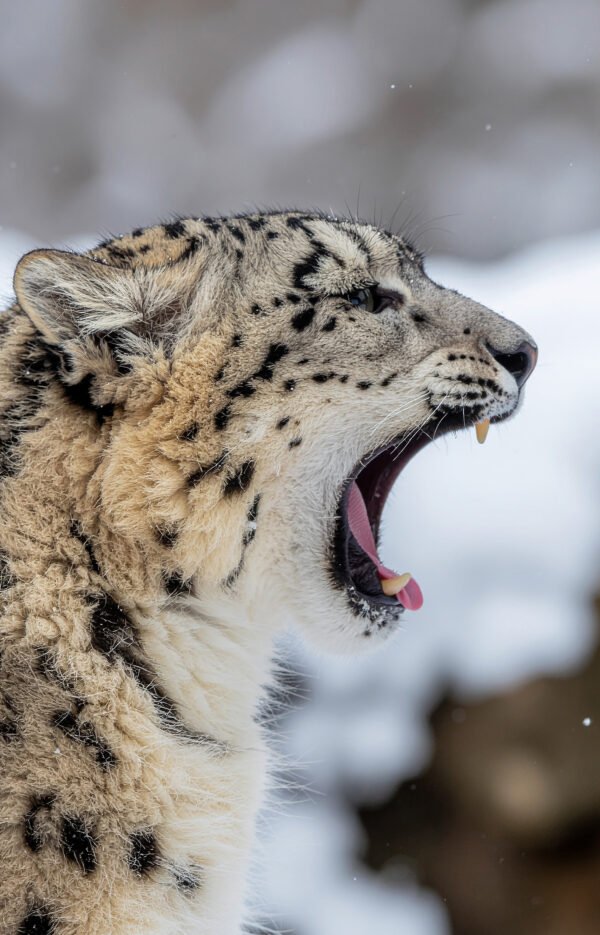
India’s trans-Himalayan cold desert, where the snow leopard, lesser known as The Ghost Of Himalayas, rules the ridgelines, and blue sheep, wolves, and golden eagles share its kingdom.
Safari Timings
The prime window runs from late January through March, when snow pushes the blue sheep, and the leopards that follow them, down toward the valley floors. Days are crisp and often brilliantly clear; nights fall well below freezing, and the cold is part of the experience. Expect a gentler rhythm than a safari: acclimatisation days in Leh come first, because at this altitude, patience begins with your own body.
Ladakh
This is not a forest. There are no gates, no zones, no jeeps queuing at dawn. Ladakh is India’s high-altitude cold desert, a trans-Himalayan world of bare rock, deep river valleys and silence so complete you can hear a raven’s wingbeats across a gorge. At its heart, in valleys like Mangyu west of Leh, lives the most elusive big cat on the planet: the snow leopard, known here as shan, and to the world as the Ghost of the Mountains.
Ladakh is also a living culture. Monasteries hold the ridgelines the way forts hold the plains of Rajasthan, and the search for the shan moves through villages where people have shared these mountains with the cat for a thousand years. Here, wildlife and way of life are the same story.
Flora
At 3,000 metres and above, life keeps a low profile. The slopes carry sparse alpine steppe and scattered juniper, while the valley floors hold seabuckthorn thickets and stands of willow and poplar around the villages. It looks austere until you learn to read it: every patch of vegetation is a magnet for blue sheep, and where the blue sheep graze, the snow leopard follows.
Fauna
The snow leopard rules this landscape, and everything else arranges itself around that fact. Blue sheep (bharal) and Asiatic ibex hold the crags, Ladakh urial the lower slopes, and Tibetan wolves and red foxes work the valleys between them. Smaller residents like woolly hares and pikas keep the food chain turning through the coldest months. Sightings here are built differently than in tiger country: spotters glass the ridgelines for hours, and when the call comes, it is the product of patience, skill and generations of local knowledge.
Birdlife
The skies belong to giants. Golden eagles, Himalayan griffons and the lammergeier, the bone-breaking bearded vulture, patrol the thermals, while Himalayan snowcocks and chukars call from the slopes. Along the rivers, white-winged redstarts and brown dippers work the open water, and in summer the high wetlands of eastern Ladakh host the rare black-necked crane.
The Safari
Tracking a snow leopard is unlike anything else in Indian wildlife. There is no drive-through luck here. Days begin with spotters reading the mountainsides through scopes, checking pugmarks in fresh snow, listening for the alarm whistles of blue sheep. When a cat is found, you move to it on foot, at a pace the altitude sets, and watch from a distance the animal decides. It is the purest form of responsible wildlife tourism in India: low-impact, community-led, and built so that every expedition funds the villages and research that keep the shan alive. Evenings return you to Ladakhi hospitality, a warm lodge, and image reviews under the clearest night sky in the country. For photographers, this is the summit of wildlife photography tours in India, in every sense.



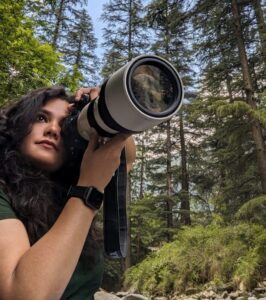 Apoorva Jadon