
Keoladeo Ghana National Park Safari
A maharaja’s duck-hunting ground turned World Heritage wetland, where sarus cranes, painted storks, and Himalayan geese gather each winter.
Safari Timings
Keoladeo stays open year-round, sunrise to sunset, but its calendar has a clear crescendo. November through March is the season, and January and February are the peak, when the migratory count crests and the mornings turn cold and gold. Carry warm layers for the first hours; the mist lifting off the marshes is worth the chill several times over. Summer thins the crowds and the water but brings the resident breeders into their own. Bharatpur is an easy drive from Agra, Jaipur or Delhi, which makes Keoladeo the rare world-class wilderness you can reach by lunchtime.
Keoladeo:
Everything else in this collection asks you to search. Keoladeo asks you to stand still. Set on the edge of Bharatpur in Rajasthan, squarely between Agra and Jaipur, this compact mosaic of marshes, woodland and grassland is one of the most important bird habitats on earth, a UNESCO World Heritage Site barely 29 sq. km. across that hosts more avian life than forests thirty times its size.
Its history is the strangest part. Keoladeo is largely man-made, engineered by the Maharajas of Bharatpur as a duck-hunting reserve, its wetlands fed by managed canals and bunds. The same waters that once drew hunting parties now draw one of the great gatherings of the natural world: tens of thousands of migratory birds funnelling down the Central Asian flyway each winter to a wetland the size of a small town. Few places anywhere have travelled so far from what they were built for.
Flora:
Keoladeo is a patchwork rather than a forest: shallow marshes and flooded meadows, stands of kadam and babul rising from the water, dry grassland and scrub on the higher ground. The mix is the secret. Every habitat holds its own residents, and because the park is small and flat, a single unhurried morning moves you through all of them. In winter the wetlands wear their full flood, and the trees above them turn white with nesting colonies.
Fauna:
The supporting cast is better than most parks’ headliners. Nilgai and spotted deer graze the drier meadows, golden jackals patrol the bunds at dawn, and rock pythons sun themselves outside their burrows on cold mornings with a reliability that has made them a Keoladeo institution. Otters work the deeper channels, and fishing cats hold the reed beds for those with patience and luck.
Birdlife
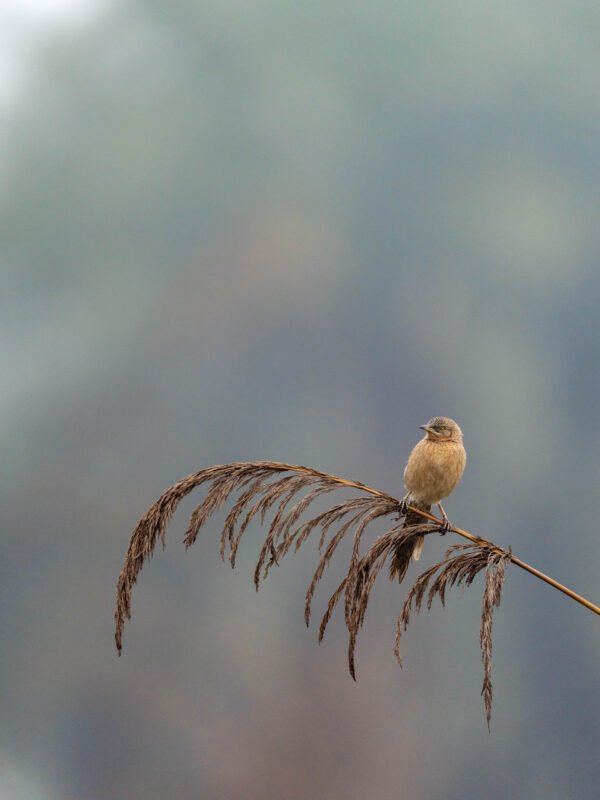
This is the page where the numbers do the talking: over 350 recorded species in 29 square kilometres. Winter is the crescendo, when bar-headed geese arrive over the Himalaya from Central Asia, ducks raft in the thousands, and the sarus crane, the tallest flying bird on earth, dances in the meadows. The heronries are the spectacle within the spectacle: painted storks, spoonbills, ibises, egrets and cormorants nesting in such dense colonies that whole trees seem to breathe. Raptors stack the sky above it all, from marsh harriers to the occasional imperial eagle. Keoladeo was once the wintering ground of the Siberian crane, whose last individuals stopped coming in the early 2000s; the park remembers, and its protection today is part of making sure no other name joins that list.
The Chambal Day
- A short drive from Bharatpur, the National Chambal Sanctuary protects one of the last truly wild rivers in northern India
- Boat safaris drift past gharials, the slender-snouted crocodilians found almost nowhere else on earth, hauled out on the sandbanks beside marsh crocodiles
- The river is the stronghold of the Indian skimmer, scissor-billed and stunning, along with Gangetic dolphins that break the surface without warning
- Paired with Keoladeo, it turns a birding trip into a two-habitat masterclass: wetland and river, colony and current
The Safari:
Keoladeo rewrites the rules of the Indian safari: there are no jeeps here. You move on foot, by bicycle or by cycle rickshaw, pedalled by local naturalist-guides whose bird knowledge has been the park’s living archive for generations. The pace changes everything. Sightings are not glimpsed from a moving vehicle but watched, composed and understood, which is why photographers treat Keoladeo as a masterclass in patience, and why the field ethics matter here more than anywhere: no baiting, no flash, no pressure on nesting colonies. This is conscious wildlife travel in India in its purest form. And for travellers building an India golden triangle with tiger safari itinerary, Keoladeo is the stop hiding in plain sight, sitting directly on the Agra-Jaipur road with Ranthambore a short hop beyond.
Destination Map
What to do
Jeep Safaris
Go on a jeep safari in the core areas of the forest such as Turia, Karmajhiri, and Jamtara, with expert naturalists, either in the morning or the evening.
Pottery and Village Walks
Explore local communities to experience how forest communities live, their traditional ways of craftsmanship as well as their connection to nature.


 Apoorva Jadon