
Kanha Tiger Reserve
A lush wilderness of sal and bamboo, home to tigers, leopards, the barasingha brought back from extinction, and over 300 bird species.
Safari Timings
Winter (October to February)
- Morning safari: 6:30 AM to 11:00 AM
- Evening safari: 2:30 PM to 5:30 PM
Summer (March to June)
- Morning safari: 5:30 AM to 10:00 AM
- Evening safari: 3:30 PM to 7:00 PM
Timings vary slightly with the season. If you are working out how to plan a tiger safari in India, Kanha pairs naturally with Bandhavgarh: the two parks sit a comfortable drive apart, and together they balance Kanha’s landscapes and rare species with Bandhavgarh’s sighting odds.
Kanha Tiger Reserve
Set in the Maikal Hills of Madhya Pradesh, Kanha is one of India’s largest and best-managed national parks, and many would argue its most beautiful. The core spans roughly 940 sq. km. of dense sal and bamboo forest, open meadows, riverine belts and rolling terrain, the very landscape said to have inspired The Jungle Book.
But Kanha’s greatest story is not its scenery. It is recovery. The hard ground barasingha, a swamp deer found nowhere else on earth, was down to a few dozen animals in the 1960s. Decades of patient habitat work brought it back from the edge of extinction, and today herds graze Kanha’s meadows again. Few places anywhere demonstrate what protection, done right, can actually achieve.
Flora:
Towering sal forest defines Kanha, broken by stretches of bamboo and wide meadows. The monsoon turns the park impossibly green, while the dry summer months thin the cover and bring wildlife to the water, making them the prime season for sightings.
Fauna:
Bengal tigers, Indian leopards, sloth bears and dholes, the wild dogs of central India, all hold territory here, alongside the hard ground barasingha found nowhere else on the planet. Gaur move through the sal like shadows twice the size of cattle, and sambar, barking deer, jackals and jungle cats round out one of the richest wildlife communities in the country. On any wildlife tour of India, Kanha is where the supporting cast rivals the stars.
Avifauna (Birds):
With over 300 recorded species, Kanha rewards birders as generously as it rewards tiger seekers. Watch for crested hawk-eagles, collared scops owls, green bee-eaters, Indian peafowl and black ibises, with woodpeckers, flycatchers and warblers working every layer of the forest.
The Safari:
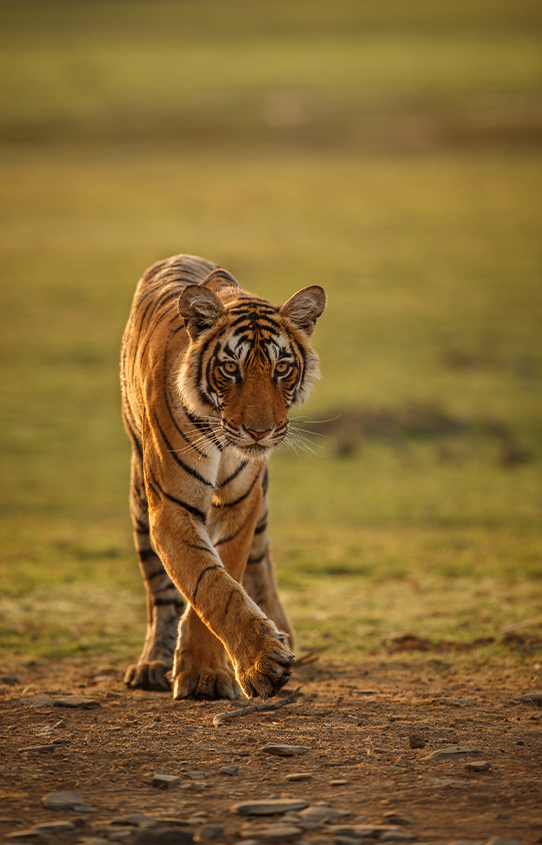
A safari in Kanha feels different from anywhere else in central India, and the meadows are the reason. The forest opens into grasslands where barasingha graze in the golden hour and tigresses walk the tree line, giving photographers the kind of clean, layered frames that dense jungle rarely allows. This is why Kanha anchors so many guided wildlife photography tours: the light, the sightlines, and naturalists who know the forest well enough to put you in the right meadow before the moment happens. It is also, quietly, the most hopeful drive in India. Every barasingha you photograph here is an animal that almost did not exist.
Destination Map
What to do
Jeep Safaris
Discover the diverse landscapes of Kanha through guided jeep safaris across its four zones — Kanha, Kisli, Sarhi, and Mukki.
Barasingha Spotting
Visit the central meadows to witness the iconic swamp deer (barasingha), a conservation success story unique to Kanha.
Nature Education Centre
Engage with informative exhibits that showcase Kanha’s rich biodiversity and its pivotal role in wildlife conservation.
Tribal Village Experience
Get a glimpse into the lives of the Gond and Baiga communities and their deep-rooted connection with the forest.



 Apoorva Jadon