
Wildlife in Kanha National Park Beyond Tigers
Kanha Safari Guide
Ask most travellers why they’re booking a Kanha tiger reserve tour and the answer is almost always the same word: tigers. Fair enough, Kanha has earned that reputation. But spend even one full day inside the park and you start to realise the tiger is really just the headline act in a much bigger show, one built around meadows, sal forest, and a deer species that exists almost nowhere else on the planet. So what else is actually worth watching for once the tiger has moved on?
Quite a lot, as it turns out, and most of it barely gets mentioned before people book.
The hard-ground barasingha is Kanha's real conservation story
If Kanha has one animal it should be proud of beyond the tiger, it’s the hard-ground barasingha, a subspecies of swamp deer found only here. By the 1970s, the population had crashed to under 70 individuals, and the species came dangerously close to disappearing entirely from the wild. Decades of dedicated protection inside Kanha brought that number back into the thousands, and today the meadows of Kanha are essentially the only place left on earth where you can see this exact deer in its natural habitat.
A Kanha tiger reserve tour is, in many ways, built around this single success story more than travellers realise, because the barasingha isn’t a rare, hard-to-find bonus sighting the way a leopard often is. Herds graze openly in the meadows during daylight hours, often visible from the road without any tracking required at all. It’s one of the few conservation success stories in Indian wildlife tourism where the recovered species is now this easy to actually see.
Gaur turn Kanha's meadows into something closer to an African savanna
Gaur, the largest wild cattle species on the planet, move through Kanha in loose herds that can number a dozen or more animals. Bulls can weigh close to a tonne, and watching one graze at close range in open meadow is a genuinely different kind of wildlife encounter than anything a tiger sighting offers. There’s no tension, no waiting, just sheer scale standing in front of you.
Kanha’s open meadow structure is part of what makes gaur sightings so consistent here. Unlike denser reserves where large herbivores stay tucked into cover, Kanha’s landscape was shaped historically to support exactly this kind of grazing wildlife, and the gaur have clearly taken advantage of it ever since.
What does Kanha's forest structure actually offer that other reserves don't?
Kanha alternates between sal forest and open grassland meadows in a way that creates genuinely varied sighting conditions across a single drive. The forest interior is where leopards and smaller wildlife tend to stay, while the meadows draw out barasingha, gaur, and the chital that move through in large, easily visible herds. This structure is also why Kanha rewards patience differently than a denser reserve. A quiet meadow can suddenly fill with alarm calls the moment something moves through the treeline at its edge.
Kanha also happens to be one of the better places in India to actually pick up tips for spotting tigers in the wild. Because visibility is so much better here than in thick forest, travellers can watch a guide read alarm calls, track herd behaviour, and predict tiger movement in real time, rather than simply being told a tiger was nearby after the fact.
The sloth bear turns up when you least expect it
Sloth bears are neither rare nor common at Kanha, which is part of what makes them interesting. Unlike the more predictable grazing patterns of gaur or barasingha, sloth bears tend to appear suddenly, often digging through termite mounds or turning over rocks in search of insects, oblivious to the vehicle that’s just stopped to watch. Their behaviour is chaotic and entertaining in a way that feels completely different from the more composed, watchful presence of a tiger.
A Kanha tiger reserve tour rarely comes with a promised sloth bear sighting the way tiger odds get discussed, precisely because the behaviour is so unpredictable. When one does show up, it tends to become the story of the entire trip regardless of what else happened that day.
Birdlife rewards the traveller who slows down
Kanha holds a genuinely impressive bird list, with species ranging from the Indian roller and paradise flycatcher to several types of raptors working the open meadows for prey. Morning drives, in particular, tend to be loud with birdsong well before any mammal sighting occurs, and travellers focused entirely on tigers often miss just how much is happening at eye level and above throughout the drive.
Kanha is also an excellent destination for wildlife photography tours India travellers increasingly seek out, since its birdlife offers a genuinely rewarding secondary subject, one that doesn’t require the same luck or patience a tiger sighting demands. A quiet morning with no tiger activity can still produce a memory card full of usable frames if the birds are given proper attention.
Chital herds do more work than they get credit for
Spotted deer, or chital, move through Kanha in genuinely large herds, often numbering in the dozens, and they’re easy to overlook simply because they’re so common. That’s a mistake. Chital behaviour is one of the most reliable early warning systems in the park, since their alarm calls tend to go up the moment a predator moves anywhere near the herd. Guides tend to watch chital as closely as they watch for the tiger itself, reading sudden stillness or a shift in grazing direction as a signal worth following.
Beyond their tracking value, chital herds are also simply a pleasure to watch at length, particularly during the golden hour when Kanha’s meadows take on a warm, low light that makes even routine grazing look cinematic.
Jackals and wild dogs round out Kanha's predator picture
Tigers and leopards get most of the attention, but Kanha also supports golden jackals and, less frequently, dhole packs moving through its forest edges. Jackals are seen with some regularity, usually singly or in pairs, trotting along forest tracks in early morning light. Dhole sightings are rarer here than in some other central Indian reserves, but they do occur, and a pack moving through Kanha’s mixed terrain is a genuinely memorable sighting precisely because so few visitors expect it.
This layered predator picture, tiger, leopard, dhole, and jackal all sharing the same landscape, is part of what makes Kanha feel like a complete ecosystem rather than a park built around a single headline species.
So does all this wider wildlife actually change how a Kanha trip should be planned?
It should, and this is where most first-time travellers get their expectations slightly wrong. A Kanha tiger reserve tour can easily be treated as a kind of lottery across four to six drives, judged entirely by whether a tiger appeared. Building the same itinerary around Kanha’s full wildlife picture changes the calculation completely, because barasingha, gaur, and birdlife are consistent enough that a drive without a tiger still delivers a genuinely full experience.
This shift in mindset tends to matter most for travellers planning their first visit, since arriving with tiger-only expectations sets up disappointment that simply isn’t necessary given everything else the park reliably offers.
How does Kanha compare to other central Indian reserves for non-tiger wildlife?
Kanha’s meadows give it a real edge here. Reserves like Bandhavgarh and Pench are excellent for tiger density but don’t offer the same scale of open grassland wildlife that Kanha’s meadows and the Bamni Dadar area provide. Bamni Dadar in particular is known specifically as a sunset viewpoint where gaur and barasingha are commonly seen against open sky, a kind of sighting that denser, more forested reserves simply can’t replicate in the same way.
Kanha is, for this reason, considered one of the best national parks for tigers in India, not because its tiger density beats every competitor, but because the overall wildlife experience is simply broader and more consistent across an entire trip.
Why timing your drives around Kanha's light matters as much as timing your season
Beyond choosing the right months to visit, the time of day shapes what you’re likely to see just as much. Early morning drives tend to favour predator activity and birdsong, while the hours just before sunset consistently bring gaur and barasingha out into open meadow in the kind of light that makes for genuinely strong photography. A Kanha tiger reserve tour becomes noticeably richer when drives are split deliberately between dawn and dusk, rather than treating every drive the same, since it tends to produce a far more varied set of sightings and images than simply booking whatever slots are available.
What should first-time visitors actually prioritise?
Beyond the obvious hope for a tiger, first-time visitors should specifically ask their guide about barasingha herd locations and recent gaur activity near the meadows, since these sightings are considerably more predictable than tiger movement and tend to anchor a strong drive even on quieter days. Building in at least one drive that includes Bamni Dadar, timed around sunset, is also worth prioritising given how distinctive that particular sighting experience is compared to a standard forest drive elsewhere in the park.
Travellers who treat these non-tiger sightings as genuine priorities, rather than filler between tiger attempts, tend to come away with a far more complete sense of what makes Kanha worth visiting in the first place.
A few practical notes before you book
Kanha’s core zone typically closes during the monsoon months, so most non-tiger sightings described here are best planned for the October through June window when the park is fully accessible. Meadow-heavy areas like the meadows near Bamni Dadar tend to see slightly less vehicle traffic than the denser forest zones favoured for tiger tracking, which works in your favour if the goal is a slower, less crowded look at barasingha and gaur specifically. A Kanha tiger reserve tour is easiest to plan well when at least one dedicated meadow-focused drive is built into the itinerary from the start, rather than treating every drive as a tiger hunt.
FAQs
Q – What is the hard-ground barasingha and why is it unique to Kanha?
Ans – It’s a swamp deer subspecies found only at Kanha, brought back from under 70 individuals in the 1970s to a stable population today through decades of dedicated conservation work.
Q – Is Kanha good for wildlife photography beyond tigers?
Ans – Yes, its open meadows and strong birdlife make it a rewarding destination for wildlife photography in India, even on drives without a tiger sighting.
Q – What is Bamni Dadar known for?
Ans – It’s a sunset viewpoint within Kanha known for consistent gaur and barasingha sightings against open sky, a distinctive experience compared to standard forest drives.
Q – How does Kanha compare to Bandhavgarh for wildlife variety?
Ans – Bandhavgarh generally offers stronger tiger density, while Kanha’s open meadow structure supports a broader, more consistent range of large herbivore and bird sightings.
Q – Can I learn to spot tigers better by watching other wildlife at Kanha?
Ans – Yes, Kanha’s open visibility makes it easier to watch guides read alarm calls and herd behaviour in real time, offering some of the best hands-on ways to learn how to spot tigers in the wild.
Conclusion
A Kanha tiger reserve tour built entirely around tiger odds misses most of what actually makes this park remarkable. The hard-ground barasingha exists almost nowhere else on earth, the gaur turn open meadows into something closer to an African plain, and sloth bears, birdlife, and Bamni Dadar’s sunset views round out a wildlife picture that stays rich even on the days the tiger stays hidden. Come for the tiger if that’s the draw, but plan the trip around everything else Kanha does exceptionally well, and the tiger becomes a bonus rather than the entire point.
Ethical Wildlife curates small-group, photography-led safaris in India and Africa. They specialise in tiger safaris in Bandhavgarh, snow leopard expeditions in Ladakh, and a multitude of trips that connect travellers with nature, ethically and meaningfully. Their focus is on deep experiences, guided by expert naturalists and photographers, and they hold their journeys to inspire, educate and respect nature and the wild.



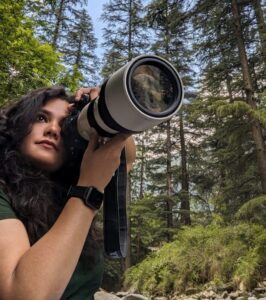 Apoorva Jadon