
Jawai Tiger Reserve
A surreal granite wilderness where leopards roam free among Rabari herders. Raw coexistence, extraordinary photography, and a stillness you will not find anywhere else.
Safari Timings
- Morning safari: 6:00 AM to 9:00 AM
- Evening safari: 4:00 PM to 7:00 PM
Timings vary slightly with the season.
Jawai Leopard Reserve
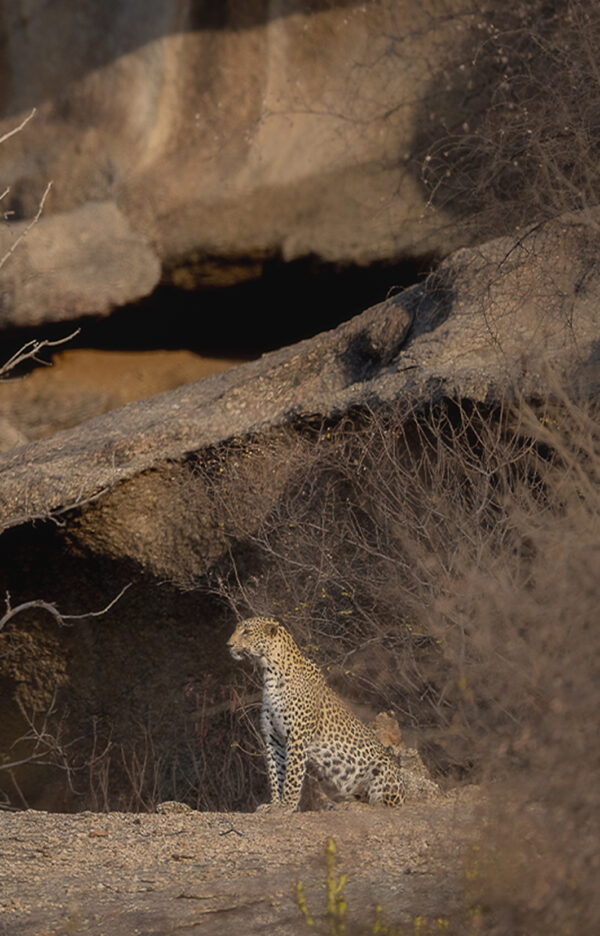
Set in Rajasthan’s Pali district, Jawai looks like no other wilderness in India. There is no dense forest here, none of what we expect a reserve to be. Instead, ancient granite hills rise out of open scrubland, their caves and crevices sheltering one of the densest leopard populations in the country. Alongside them live the Rabari, pastoral herders whose quiet acceptance of the big cats has shaped this landscape for generations.
Jawai is not about the jungle. It is about coexistence, stillness, and some of the greatest photographic theatre on earth. Few places on the planet let large cats roam freely through inhabited land with so little conflict, which makes this less a safari destination and more a lesson in conscious wildlife travel.
The Vegetation:
Jawai’s cover is sparse by design: scrub, grassland and scattered acacia and cactus across open rocky ground. That openness works in your favour. With little vegetation to obstruct the view, the granite outcrops become natural stages, and spotting and tracking leopards here is more generous than in any forest reserve.
The Fauna:
The leopard is the undisputed centre of a big cat safari in Jawai, and while no wild sighting is ever guaranteed, your odds here are among the best in India. The supporting cast includes striped hyenas, jungle cats, Indian foxes, sloth bears, porcupines, and crocodiles in the Jawai dam. What sets Jawai apart is the peace: attacks on people are virtually unheard of, the Rabari do not retaliate against the cats, and the result is a rare equilibrium between humans and predators that exists almost nowhere else.
Avifauna (Birds):
With over 200 recorded species, Jawai rewards birders as much as leopard seekers. In winter, flamingos, bar-headed geese and cranes gather at the Jawai dam in their thousands, while eagles, vultures, kingfishers and owls hold the skies through the year.
The Safari:
Because Jawai is not bound by formal tiger reserve regulations, safaris here are flexible in a way few Indian parks allow. Drives are led by local trackers who have known these hills, and often these individual leopards, all their lives. It is responsible wildlife tourism at its most intimate: unhurried, low-impact, and guided by the people who belong to this landscape.
Destination map
What to do
Leopard Safaris:
Conducted in custom open 4x4s, with experienced trackers who are knowledgeable in leopard movements.
Village Walks:
Meet Rabari herders and understand their day-to-day life along with cultural and spiritual connection to the land and leopards.
Birdwatching:
Enjoy quiet mornings beside the Jawai Dam observing flamingos and migratory birds.
Granite Trail hikes:
Hike to viewpoints and caves to take photographs or simply experience the surreal landscape.
Jawai is not simply a destination. It is a way of living with nature. It is perfectly suited for those who want a wildlife experience without the traditional confines of reserves.


 Apoorva Jadon