
How Many Days for a Tiger Safari in India:
Is One Day Ever Enough?
Every year, travellers land in India, book a single day at a tiger reserve, and leave disappointed when the tiger they came for never appears. It’s not bad luck, and it’s rarely a poorly run safari. It’s usually a scheduling mistake made months earlier, when how many days for a tiger safari wasn’t given nearly enough thought before the trip was booked.
A single day, or even a single drive, can absolutely produce a sighting. It happens all the time. But building an entire trip around that possibility, rather than around how tiger reserves actually work, sets most travellers up for a frustrating experience they didn’t need to have. This piece looks honestly at how many days a tiger safari actually needs, and why the answer matters more than almost any other decision you’ll make while learning how to plan a tiger safari in India.
Can you actually see a tiger in one day?
Yes, and it happens often enough that people assume it’s the norm. A single well-timed drive in a park with high tiger density can produce a clear, close sighting within the first hour. Reserves like Bandhavgarh and Ranthambore are known for relatively strong sighting odds, and a lucky guest on day one can walk away thinking a single day was all they ever needed.
The problem is that this outcome is not something you can plan around. Tiger movement depends on territory, prey activity, weather, time of year, and a dozen other variables no guide can fully predict. Treating a one-day success story as the expected outcome is where most disappointment on future trips comes from.
Why does one day usually fall short?
A single day typically means two drives, one in the morning and one in the afternoon, inside a reserve that spans hundreds of square kilometers. Tigers are territorial but not stationary, and a single pair of drives covers only a fraction of the terrain where a resident tiger might be at any given moment. If the tiger you’re hoping to see happens to be resting deep in cover during both of your windows, one day gives you no room to try again.
This is compounded by how reserves are structured. Most tiger reserves are divided into zones, and safari permits typically assign you to one zone per drive. A tiger active in a different zone that day simply isn’t something two drives in one zone can reach. One day works when everything aligns. It fails, often quietly and without explanation, when it doesn’t.
So how many days should you actually plan for?
Most experienced operators recommend a minimum of three days, ideally spread across four to six drives, to give yourself a realistic chance at a strong sighting without relying entirely on luck. Three days allows for zone rotation, adjustment based on recent tiger movement reported by other guides and trackers, and enough drives that a quiet morning doesn’t define the entire trip.
For travellers serious about photography, or interested in observing behavior rather than a single fleeting sighting, four to five days is often a better target. This is especially true for those exploring wildlife safari packages India offers across multiple reserves, since additional days also allow for a slower pace, better light for photography, and repeat visits to the same territory where a tiger has been active.
Does the number of days depend on which reserve you're visiting?
Yes, significantly. Reserves vary in tiger density, terrain visibility, and vehicle traffic, all of which affect how many days you realistically need. Parks with dense forest cover and lower visibility, such as parts of Pench, may require more drives than a park like Ranthambore, where more open terrain and higher tiger density can produce sightings faster. Anyone researching best national parks for tigers in India should factor sighting difficulty into their day count, not just reputation or popularity.
Reserves with multiple zones also benefit more from additional days, since a longer stay allows guides to rotate you through zones with recent tiger activity rather than being locked into one area for the entire trip.
Does the time of year change how many days you need?
It does, and this is one of the most overlooked factors in trip planning. Dry summer months, typically April through June, tend to concentrate tiger movement around water sources, which can shorten the number of days needed for a sighting since tigers are more predictable during this period. Monsoon months bring thicker vegetation and lower visibility, often requiring more drives and more patience.
This is part of why best time for tiger safari in India and trip length are really two sides of the same planning decision. A well-timed trip during peak dry season might only need three days to feel confident. The same three days in dense monsoon-adjacent vegetation might not be enough.
How does trip length affect tiger safari cost in India?
More days naturally mean a higher overall cost, but the relationship isn’t purely linear. Additional permits, zone entries, and vehicle time add up, but many operators offer better per-day value on longer stays, since fixed costs like guide coordination and vehicle logistics are spread across more drives. Understanding tiger safari cost in India properly means looking at cost per drive and cost per realistic sighting chance, not just the total trip price. A cheaper one-day trip with a low sighting probability is often a worse value than a slightly more expensive three-day trip with meaningfully better odds.
What should you do if you genuinely only have one day?
If a single day is truly all your itinerary allows, the smartest move is to maximize both drives rather than treating them as a formality. Choose a reserve known for strong sighting consistency, work with a guide who has current knowledge of recent tiger movement, and be present and alert for the entire drive rather than only the first twenty minutes. One day can still work. It simply requires accepting that the odds are lower and being deliberate about every variable you can control.
It also helps to arrive with realistic expectations. A trip built around other wildlife, landscape, and the experience of being in the forest, with a tiger sighting as a possible highlight rather than the only measure of success, tends to leave travellers far more satisfied than a trip staked entirely on one outcome.
FAQs
Q – Is a one-day tiger safari worth booking at all?
Ans – Yes, particularly if it’s part of a larger trip and not the sole reason for travel. It carries real sighting risk, but it can still be a rewarding experience on its own.
Q – How many safari drives happen per day?
Ans – Most reserves offer two drives daily, one in the early morning and one in the afternoon, each lasting roughly three to four hours.
Q – Do more days guarantee a tiger sighting?
Ans – No, sightings are never guaranteed regardless of trip length, but more days meaningfully improve the probability compared to a single day.
Q – Should I split my days across multiple reserves instead of staying at one?
Ans – For most travellers, staying longer at one reserve with strong tiger density is more effective than splitting limited days across multiple parks, since it allows guides to track activity more consistently.
Conclusion
One day at a tiger reserve can produce an unforgettable sighting, and for some travellers, it does. But planning a trip around that possibility, rather than around how territories, zones, and seasons actually work, is where most disappointment begins. Three days gives you a realistic shot. Four or five gives you room to actually understand the forest you’re in, not just pass through it. However many days you choose, going in with the right expectations matters just as much as the itinerary itself.
Ethical Wildlife curates small-group, photography-led safaris in India and Africa. They specialise in tiger safaris in Bandhavgarh, snow leopard expeditions in Ladakh, and a multitude of trips that connect travellers with nature, ethically and meaningfully. Their focus is on deep experiences, guided by expert naturalists and photographers, and they hold their journeys to inspire, educate and respect nature and the wild.



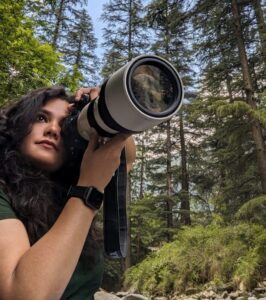 Apoorva Jadon