
Dudhwa Tiger Reserve
The last great wilderness of the Terai, where tigers, one-horned rhinos, back from local extinction, and swamp deer move beneath the tallest sal forests in India.
Safari Timings
Dudhwa opens from mid-November to mid-June and closes through the monsoon, when the Terai floods and the grasslands renew. Winter brings the migratory birds and soft grassland light; the weeks from March onward, as the waterholes shrink, offer the strongest chances with the big mammals. Morning and afternoon jeep safaris run daily in season, with timings set by the forest department; confirm the current schedule when booking. Access is via Lucknow or Bareilly, and the drive in through the Terai countryside is part of the experience.
Dudhwa
Pressed against the Nepal border in Uttar Pradesh, Dudhwa is what the entire Terai once looked like: towering sal forest, wet grasslands taller than a jeep, and swamps that hold their secrets closely. The reserve joins Dudhwa National Park with the Kishanpur and Katarniaghat sanctuaries, and together they protect one of the last intact stretches of a landscape that has vanished almost everywhere else.
Dudhwa exists because one man refused to let it go. Billy Arjan Singh, the legendary conservationist who lived on this forest’s edge, fought for its protection until the park was declared in 1977, and then fought again to bring the one-horned rhinoceros back to grasslands it had been hunted out of a century before. The rhinos returned in 1984. Their descendants graze here still, which makes Dudhwa something rare in conservation: not a place where wildlife survived, but a place where it was brought home.
Flora
Dudhwa grows on a different scale. Its sal forests are among the tallest in India, cathedral-straight trunks rising over a floor of ferns, and between them spread the phantas, the wet grasslands that define the Terai. Swamps and oxbow lakes stitch the landscape together. It is dense, humid, gloriously untidy country, and it hides its residents well.
Fauna
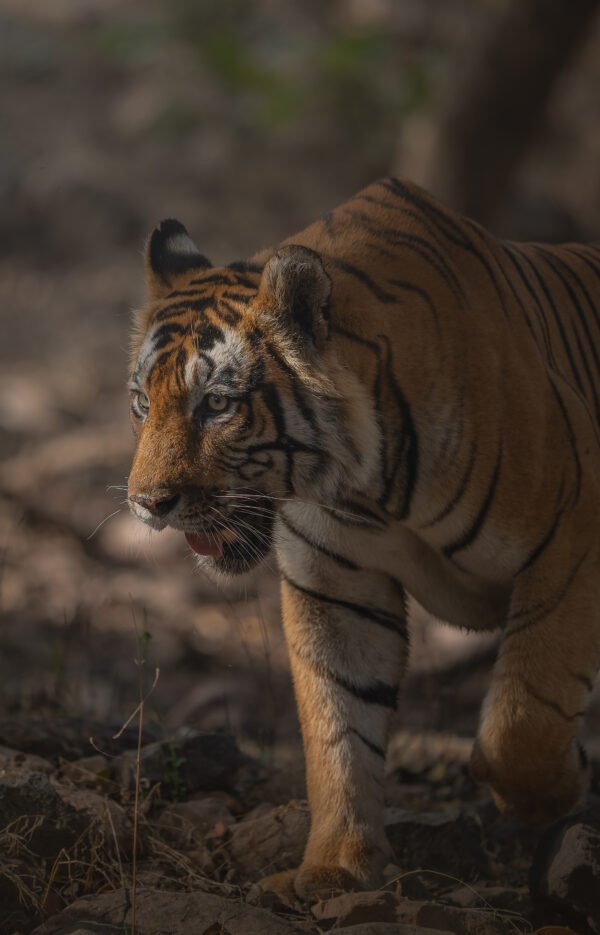
Tigers rule Dudhwa, though the tall grass makes every sighting an event earned rather than expected. Around them lives a Terai cast found together almost nowhere else: the reintroduced one-horned rhinoceros, wild elephants moving along the Nepal corridor, and one of the largest populations of the barasingha, the swamp deer, anywhere in the world. Leopards, sloth bears, fishing cats and Gangetic dolphins in the Girwa river at Katarniaghat complete a lineup that reads like the subcontinent’s original inventory.
Birdlife
With over 400 recorded species, Dudhwa is the Terai’s great aviary. The grasslands shelter the endangered Bengal florican and the swamp francolin, a Terai specialty, while hornbills work the sal canopy and the wetlands fill each winter with storks, ibises and waterfowl. For serious birders, this is one of the richest forest lists in northern India.
The Safari
Dudhwa rewards a different temperament. This is not a park of guaranteed sightings and queuing jeeps; on many drives yours will be the only vehicle in the range, and the forest sets the terms. Tiger tracking in India does not get more elemental than here: fresh pugmarks in river sand, grass moving against the wind, the held breath of a phanta at dawn. The Kishanpur sanctuary, with its lake and open grasslands, offers the reserve’s most generous sightlines, and for travellers building serious tiger reserve tours in India, Dudhwa pairs naturally with Pilibhit nearby, two chapters of the same Terai story. What Dudhwa gives you that the famous parks cannot is solitude, and in tiger country, solitude is the rarest sighting of all.


 Apoorva Jadon