
Panna Tiger Reserve
Wild gorges, the Ken River, and the greatest comeback story in Indian conservation.
Safari Timings
Winter (October to February)
- Morning safari: 6:30 AM to 11:00 AM
- Evening safari: 2:30 PM to 5:30 PM
Summer (March to June)
- Morning safari: 5:30 AM to 10:00 AM
- Evening safari: 3:30 PM to 6:30 PM
Timings vary slightly with the season. Panna also pairs naturally with Khajuraho, less than an hour away, for travellers combining wilderness with the temple circuit.
Panna
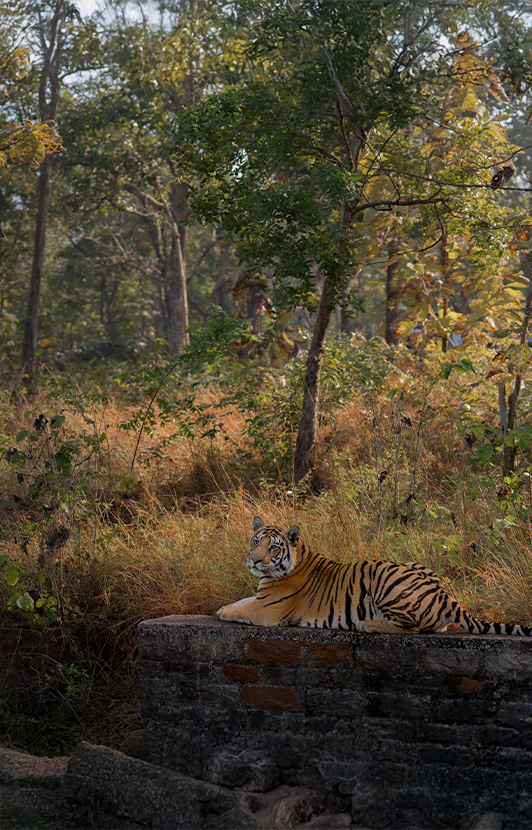
Set in the Vindhya ranges of Madhya Pradesh, Panna is one of the most dramatic landscapes in tiger India: 543 sq. km. of dry deciduous forest, scrub and open meadow, cut by plateaus and deep riverine gorges. The Ken River is the safari’s lifeline, threading through its heart and feeding the wider landscape of waterfalls like Pandav and Raneh nearby.
But Panna’s real story is resurrection. By 2009, poaching had taken every last tiger from this forest. Not a decline. Zero. What followed became one of the most remarkable chapters in Indian conservation: a reintroduction programme that rebuilt the population animal by animal, until Panna’s gorges echoed with tigers again. Today the park stands as living proof that even a lost forest can be brought back, and every sighting here carries that weight.
Flora:
Dry deciduous forest defines Panna, with regenerating teak, tendu, mahua, salai and bamboo across its plateaus. The undergrowth thins through the hot months, sharpening your chances of a sighting, while the monsoon returns the trails lush and green.
Fauna:
The Bengal tiger population is thriving again, and around it lives a cast unusual even by central Indian standards: leopards, sloth bears, chinkara, Indian wolves, striped hyenas, jackals and wild boar, with mugger crocodiles holding the Ken. Panna is also one of the few forests where the near-mythical caracal still survives, a cat so elusive that even naturalists count a glimpse as a career highlight. Reptiles and smaller mammals turn up constantly along the water and open trails.
Avifauna (Birds):
With over 200 recorded species, Panna’s skies reward attention. Look for crested serpent eagles, white-necked storks, paradise flycatchers, kingfishers and wintering bar-headed geese. The gorges hold something rarer still: nesting colonies of the critically endangered Indian vulture, riding the thermals above the Ken.
The Safari:
A safari in Panna moves differently. The gorges and plateaus stack the landscape in layers, so a single drive can take you from riverbank to tableland to cliff edge, each with its own residents. Boat safaris on the Ken add a perspective almost no other tiger reserve offers: crocodiles on the banks, vultures on the cliffs, and sometimes a tiger come down to drink. For travellers who choose sustainable wildlife tours in India, Panna is the destination that means the most, because here your presence funds the very programme that brought the tigers back. Fewer vehicles, quieter trails, and a forest with a story in every track: this is the eco-friendly tiger safari at its best.
Destination map
What to do
Jeep Safaris:
You can take guided jeep safaris in core zones of Madla and Hinauta in the early morning or evening with trained naturalists.
Ken River Boat Ride:
Taking a boat ride on the Ken River is pleasurable, and you can view crocodiles, turtles, and migratory birds from a very quiet spot on the water.
Raneh Falls Visit:
This spectacular canyon of crystalline granite (various shades of red and pink) is just outside the park and is the highlight of your visit.
Ken Gharial Sanctuary:
This sanctuary is near Raneh Falls and provides a unique opportunity to see gharial crocodiles, a critically endangered species, and some are very old and have a fascinating history of being prehistoric.
Cultural excursions:
Combine your safari with a visit to the Khajuraho temples, a UNESCO World Heritage Site famous for its sculpted images, sculptures and architecture, and only an hour’s drive from the reserve.
Panna is much more than a tiger reserve, it is an adventure into biodiversity, beauty and cultural history.


 Apoorva Jadon