
Maikal Hills · Madhya Pradesh · India
Kanha Tiger Safari
If you want to fall in love with an Indian forest, start here.
Kanha has a wonderful way of opening up. You drive through tall sal trees, turn a corner and suddenly find a meadow full of deer, with morning light slipping across the grass. It’s one of the most beautiful settings for a wildlife safari in India—and a place where almost every drive brings something worth watching.
In the Maikal Hills of Madhya Pradesh, Kanha’s forests, bamboo thickets and grasslands support tigers, leopards, wild dogs, gaur and a great variety of birds. But one animal gives the park a conservation story all its own: the hard-ground barasingha.
“A meadow full of deer, with morning light slipping across the grass.”
The deer that Kanha brought back from the edge
By the 1960s, the hard-ground barasingha population in Kanha had fallen dangerously low. Years of habitat restoration, protection and careful management changed its future. Today, seeing these distinctive swamp deer grazing in Kanha’s grasslands is one of the great pleasures of a safari here.
It’s an important reminder that a tiger reserve protects an entire living system. The meadows feed deer; healthy prey populations support predators; and the forest around them shelters everything from small birds to sloth bears.
A barasingha framed by the golden grass can be a photograph just as recognisably ‘Kanha’ as any tiger portrait.
The safari experience: forests, meadows and changing light
Kanha’s tourism areas include well-known zones such as Kanha, Kisli, Mukki and Sarhi. Each has its own access arrangements and character. A well-paced trip might include different habitats rather than putting every hope into one zone that had a tiger sighting yesterday.
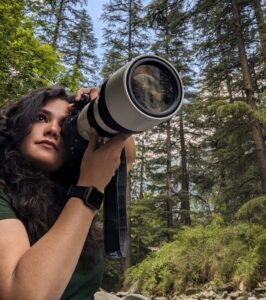
The best guides interpret what the forest is telling them: an alarm call in the sal woodland, a change in deer behaviour along a meadow edge, fresh movement on the track. For guests with cameras, a tour leader can also help anticipate where the light will fall, how to frame a distant animal and when a wider photograph tells a better story.
Include the landscape
Kanha rewards photography that includes the landscape. Think of gaur beneath towering trees, barasingha on open grass and, if the forest offers it, a tiger walking along a meadow’s edge.
How to plan Kanha well
Best months
The main safari season generally runs October to June, subject to official zone calendars. Winter dawns can be cold; summer drives are considerably hotter.
Access
Jabalpur and Raipur are practical airports for different routes. The transfer to your actual gate and lodge matters more than a generic distance to Kanha.
Stay
Three or four nights make sense for a rewarding visit with multiple safaris and time to enjoy the reserve.
Make it a circuit
Pair Kanha with Bandhavgarh for two contrasting tiger landscapes, or include Pench for teak forest and wild-dog country.
Our favourite reason to recommend Kanha
It’s a great tiger destination, but it never feels like a one-animal holiday. There’s beauty in the forest itself, tremendous variety in the wildlife and one of India’s most encouraging conservation stories unfolding across the meadows. Our favourite way to explore it is with a small group, a local naturalist who knows the habitat and a photographer who can help turn the changing light into memorable images.
Discover Ethical Wildlife’s Kanha tours and let us plan the zones, drives and photographic opportunities around your interests.
Kanha safari FAQs
Is Kanha good for first-time safari travellers?
Very much so. Its scenery, wildlife diversity and established safari arrangements make it a rewarding introduction.
What is Kanha especially famous for?
Tigers, sal forests, open meadows and the recovery of the hard-ground barasingha.
Which safari zone is best?
That depends on permits, your lodge and local conditions. A thoughtful multi-drive itinerary matters more than treating a single zone as a guarantee.



 Apoorva Jadon